
Visiting Auschwitz from Krakow- what should you know before your visit?
Visiting Auschwitz from Krakow is a history lesson that requires preparation. The tour covers the Auschwitz I and Birkenau camps, lasts approximately 3.5 hours (excluding travel time from Krakow), and is best done with a guide, maintaining respect. It is a deeply moving experience that goes beyond the scope of a traditional sightseeing trip. It is a journey into the heart of one of the darkest chapters in human history.
To fully understand the significance of this place and pay tribute to the victims, proper preparation – both factual and emotional – is essential. This article will help you plan this important experience thoughtfully.
Table of Contents
- History of the Auschwitz- Birkenau Memorial Site- an introduction before the tour
- What does a tour of Auschwitz I and Birkenau include?
- The role of a museum guide: why is it worth taking a guided tour?
- Rules of conduct at the Memorial Site: respect and reflection
- Practical advice for your visit: food, toilets, safety
- Frequently Asked Questions (FAQ)
- Final Thoughts
History of the Auschwitz- Birkenau Memorial Site- an introduction before the tour
Before passing through the gate bearing the inscription ‘Arbeit Macht Frei’, it is worth taking a moment to understand the historical context of this place. Auschwitz was not a single camp, but a complex comprising over 40 sub-camps. Established by the German Nazis in 1940 on the outskirts of Oświęcim, it initially functioned as a concentration camp for Polish political prisoners. Over time, it was expanded and became the main centre for the mass extermination of European Jews during the Holocaust.
Between 1940 and 1945, at least 1.3 million people were deported here, of whom around 1.1 million perished. They were mainly Jews, but also Poles, Roma, Soviet prisoners of war and prisoners of other nationalities. Understanding the scale of this tragedy and the dual function of the camp – as a place of slave labour and immediate extermination – is fundamental to a meaningful visit to the actual site of the former camp and to understanding the traces of the crimes preserved there.
What does a tour of Auschwitz I and Birkenau include?
The Auschwitz-Birkenau Memorial and Museum consists of two main parts, situated about 3 kilometres apart. Each has a different character and tells a different part of this tragic story. A standard visit to Auschwitz covers both sites, and a free bus service runs regularly between them. Exploring both parts is essential to gaining a full understanding of how the machinery of extermination operated.
Auschwitz I – the main camp and administrative centre
The first part of the route leads through the main camp- Auschwitz I. This is where the brick prison blocks, which now house museum exhibitions, are located. Here, you can see the “Arbeit Macht Frei” gate, Block 11, known as the “Death Block,” with its underground cells, and the Death Wall in the courtyard. Exhibitions in the blocks present evidence of the crimes: thousands of pairs of shoes, suitcases with names on them, eyeglasses, and human hair. It is here that the only fully preserved crematorium and gas chamber are located, providing insight into the beginnings of the mass murder process.
Auschwitz II-Birkenau – a site of mass extermination
Birkenau is, above all, a vast, open space whose sheer scale is staggering. It was here that the Nazis carried out their plan for the “Final Solution to the Jewish Question”. The central point is the railway ramp where the deportees were selected. Towering over the site is the Gate of Death, through which the transports entered. Visitors can see the preserved wooden prisoner barracks and the ruins of four enormous gas chambers and crematoria, which were blown up by the Germans in order to cover up the traces of their crimes. It is the sheer scale of Birkenau that highlights the industrial nature of the genocide and allows us to answer the question of what to see at Auschwitz to grasp the scale of the tragedy.
The role of a museum guide: why is it worth taking a guided tour?
Although it is possible to visit independently during designated opening hours, it is strongly recommended that you take a guided tour with a certified Museum educator. A professional guide at Auschwitz is not just someone who shows you the way, but above all a historian and custodian of memory, who provides context for the places and objects you see. It is the guide who can bring history to life by recounting survivor’s testimonies, explaining the symbolism of individual objects and answering difficult questions.
Thanks to the museum guide, the visit becomes a coherent, logical narrative that leads from a general historical overview to personal, human tragedies. The educators help visitors to notice details that might otherwise be overlooked, and to understand the mechanisms that led to this tragedy. A guided tour guarantees a deeper, more informed and respectful experience of this difficult lesson in history, which is invaluable.
Rules of conduct at the Memorial Site: respect and reflection
Auschwitz-Birkenau is not just a museum, but above all the largest cemetery in the world. A specific code of conduct applies here, out of respect for the millions of victims. Every visitor is required to maintain a solemn and quiet demeanour, in keeping with the nature of this place. Before entering, please familiarise yourself with the regulations to avoid inappropriate behaviour. The following rules form the absolute basis.
- Appropriate attire: Please dress modestly, ensuring your shoulders and knees are covered. Your clothing should not feature any offensive or inappropriate slogans or symbols.
- Maintaining silence and dignity: Loud conversations, laughter or running are not permitted. Mobile phones must be switched to silent mode.
- Eating and drinking prohibited: Eating, drinking (except water on hot days), smoking and using e-cigarettes are strictly prohibited in the historical area.
- Photography: Taking photos is permitted in most places, but without the use of flash or tripods. In some interiors (e.g., the basement of Block 11 or the room containing the victims’ hair), photography is strictly prohibited.
- Luggage restrictions: Only very small bags (max. 30x20x10 cm) may be brought into the Museum. Larger luggage must be left in the storage room.
Practical advice for your visit: food, toilets, safety
When planning a visit to Auschwitz from Krakow, it is worth considering a few practical points that will ensure your comfort and allow you to focus on the essence of the visit. The entire journey and tour usually take between 7 and 8 hours, so proper logistical preparation is essential. Bear in mind that the Birkenau camp site is vast and mostly open, which means you’ll be exposed to changeable weather conditions.
Before entering the Museum grounds, every visitor undergoes a security check similar to those at airports. It is advisable to arrive well in advance. There are no catering facilities on the Memorial site; you should have a meal before or after your visit. Toilets are available in the entrance buildings to both parts of the Museum. The most important item to bring is a pair of comfortable, sturdy shoes – there are several kilometres to walk, often over uneven, historic ground. It is also worth bringing rainwear or a hat, depending on the weather forecast.
Frequently Asked Questions (FAQ)
How long does a tour of Auschwitz-Birkenau take?
A standard guided tour lasts around 3.5 hours. It includes around 2 hours at Auschwitz I and 1.5 hours at Auschwitz II-Birkenau. You should also allow time for the journey from Kraków and back, which brings the total to around 7–8 hours.
Can you visit Auschwitz without a guide?
Yes, individual tours without an educator are possible, but only during specific hours (usually late afternoon). Entry is free, but requires advance reservation of a personalized entry pass online on the Museum’s official website.
What should you wear when visiting Auschwitz?
You should dress modestly and respectfully, covering your shoulders and knees. However, the most important thing is to wear comfortable walking shoes, as the area is vast. Your clothing should also be suitable for the weather – in summer, it’s a good idea to have sun protection, and on cooler days, warm and waterproof clothing.
Is visiting Auschwitz suitable for children?
Due to the graphic nature of the exhibits and the subject matter, the Auschwitz-Birkenau Museum does not recommend that children under the age of 14 visit. However, the final decision rests with their parents or guardians.
How to get to Auschwitz from Krakow?
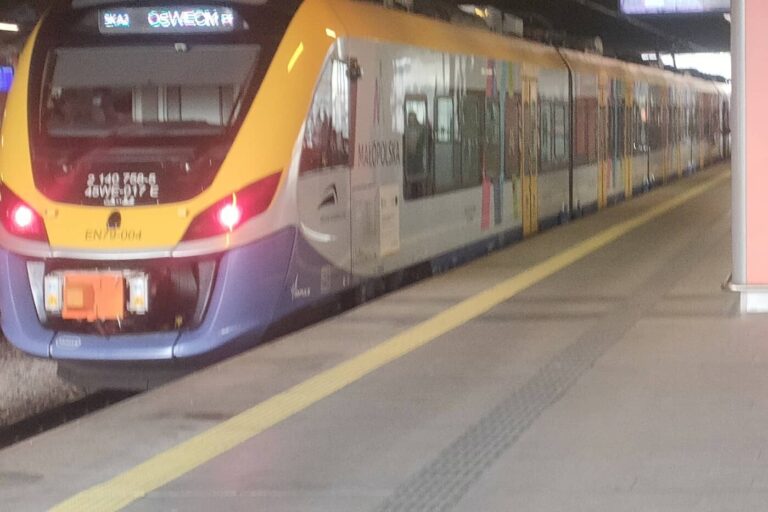
The most convenient option is to take an fully organized Auschwitz-Birkenau tour from Krakow, which includes transport, tickets and a guide. Alternatively, you can travel by public bus from Kraków’s Main Bus Station, by train to Oświęcim station (and then by local transport from there), or by car (car parks are available at the Museum).
Final Thoughts
Visiting Auschwitz from Krakow is one of the most popular, important, and valuable experiences during a visit to Poland. For most visitors, it’s a deeply moving lesson in the tragic history of Europe and the world—and so relevant today.
Whether you go there on your own or book an organised tour, visiting Auschwitz-Birkenau Memorial and Museum will make a huge impression on you and remain in your memory for a long time to come.