How Auschwitz Changed Between 1940 and 1945
The Auschwitz-Birkenau Memorial preserves one of the most significant historical sites of the Second World War. Yet many visitors are surprised to learn that Auschwitz did not always look or function as it does in the historical narrative we know today. Discover how Auschwitz changed between 1940 and 1945.
Between 1940 and 1945, Auschwitz underwent a profound transformation. What began as a relatively small concentration camp for Polish political prisoners gradually expanded into the largest complex of concentration camps and extermination facilities established by Nazi Germany.
Understanding how Auschwitz evolved over time helps explain why today’s Memorial consists of both Auschwitz I and Auschwitz II–Birkenau, and why each site tells a different part of the same history.
This timeline follows the development of Auschwitz year by year, placing key historical events into their wider wartime context.
Table of Contents
- 1940 – The Beginning of Auschwitz
- 1941 – Expansion and the Birth of Birkenau
- 1942 – Auschwitz Becomes the Centre of Mass Deportation and Extermination
- 1943 – Birkenau Reaches Full Operational Capacity
- 1944 – The Largest Deportation Campaign
- 1945 – Evacuation and Liberation
- How Auschwitz Changed Between 1940 and 1945
- How the Camps Changed Physically Between 1940 and 1945
- What Visitors See Today
- Why This Historical Timeline Matters
- Key Takeaways
- Frequently Asked Questions
- References
- Planning to Visit Auschwitz from Krakow?
1940 – The Beginning of Auschwitz
The history of Auschwitz began shortly after Nazi Germany occupied Poland during the Second World War. Following the invasion of September 1939, the German authorities sought new locations where they could imprison growing numbers of political prisoners, resistance members and civilians considered a threat to the occupation.
On 27 April 1940, Heinrich Himmler ordered the establishment of a concentration camp in the town of Oświęcim (Auschwitz), located in southern occupied Poland.
The site offered several logistical advantages:
- existing brick barracks formerly used by the Polish Army
- excellent railway connections
- space for future expansion
- relative isolation from major urban centres
Rather than constructing a completely new facility, the SS adapted existing military buildings into prisoner accommodation and administrative offices.
The First Prisoners
On 14 June 1940, the first transport arrived from Tarnów prison, carrying 728 Polish political prisoners.
Most were young men accused of participating in resistance activities or belonging to organisations opposed to German occupation.
During this first period, Auschwitz functioned primarily as a concentration camp designed to:
- imprison political opponents
- terrorise occupied Polish society
- provide forced labour
- eliminate members of the resistance
Although conditions were already brutal, Auschwitz had not yet become the centre of mass extermination for which it would later become known.
The Auschwitz established in 1940 was fundamentally different from the Auschwitz that existed only a few years later. Its original purpose reflected Nazi occupation policy in Poland rather than the later implementation of the Holocaust.
Life Inside the Early Camp
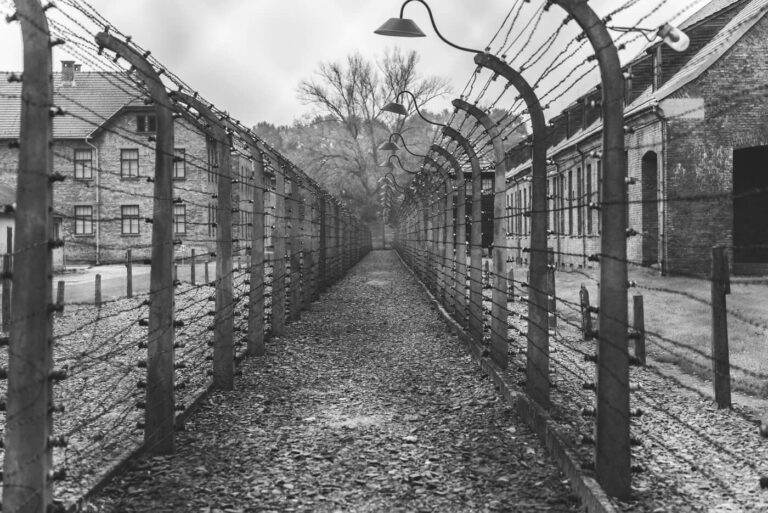
The first prisoners lived in overcrowded barracks surrounded by electrified barbed-wire fences and guarded watchtowers.
Everyday life was characterised by:
- forced labour
- insufficient food
- frequent violence
- public punishments
- strict military discipline
Prisoners were assigned identification numbers, deprived of personal possessions and subjected to systematic dehumanisation.
Many were forced to participate in the expansion of the camp itself, constructing roads, fences and additional buildings that would later become part of the growing Auschwitz complex.
1941 – Expansion and the Birth of Birkenau
The year 1941 marked a decisive turning point in the history of Auschwitz.
Following Germany’s invasion of the Soviet Union in June 1941, the number of prisoners held within the Nazi camp system increased dramatically. Auschwitz I was no longer capable of accommodating the growing prisoner population.
The SS therefore decided to construct a second, much larger camp approximately three kilometres from the original site.
Construction of Auschwitz II–Birkenau
Building work began in October 1941 in the nearby village of Brzezinka, known in German as Birkenau.
Unlike Auschwitz I, which occupied existing military buildings, Birkenau was designed almost entirely from scratch.
Its planned scale was unprecedented.
The new camp included:
- hundreds of barracks
- vast prisoner compounds
- railway infrastructure
- guard towers and perimeter fencing
- space for future industrial expansion
Initially, Birkenau was intended to accommodate approximately 100,000 Soviet prisoners of war.
However, the rapidly changing policies of the Nazi regime soon transformed its intended purpose.
The First Experiments with Zyklon B
During 1941, Auschwitz also became the site of the first experimental killings using Zyklon B, a cyanide-based pesticide that had previously been employed for disinfection.
The SS tested its use as a killing agent on groups of Soviet prisoners of war and selected prisoners inside Auschwitz I.
These experiments convinced camp authorities that Zyklon B could be used on a much larger scale.
The knowledge gained during these experiments directly influenced the later construction of gas chambers at Birkenau.
A Camp Under Constant Construction
Throughout 1941, Auschwitz resembled a vast construction site.
Thousands of prisoners worked daily on expanding roads, drainage systems, fences, barracks and administrative buildings.
The landscape surrounding Oświęcim changed rapidly as fields and villages gave way to one of the largest camp complexes created by Nazi Germany.
Although visitors today experience Auschwitz I and Birkenau as two distinct historical sites, during 1941 they were simultaneously evolving into different components of a single, increasingly complex system of imprisonment, forced labour and persecution.
1942 – Auschwitz Becomes the Centre of Mass Deportation and Extermination
The year 1942 marked the most profound transformation in the history of Auschwitz. While Auschwitz I continued to operate as the administrative headquarters of the camp complex and a concentration camp, the newly expanding Birkenau assumed a radically different role.
Following decisions taken by the Nazi leadership to implement the systematic murder of Europe’s Jewish population, Auschwitz II–Birkenau became one of the principal destinations for deportation trains arriving from across occupied Europe.
During this period, transports began arriving regularly from Poland, Slovakia, France, Belgium, the Netherlands and other occupied territories. Later, Jews from Greece, Italy, Hungary and additional countries would also be deported to Auschwitz. 2
The Arrival Process
The arrival of a deportation train followed a highly organised procedure developed by the SS.
After journeys that often lasted several days in overcrowded freight wagons, deportees were ordered to leave the trains with only the belongings they could carry. They were told to leave luggage behind for later collection, creating the false impression that they would begin a new life in the camp.
In reality, most personal possessions were confiscated, sorted and sent to warehouses known by prisoners as „Kanada” because of the large quantity of valuable goods stored there. 1
Selection on Arrival
Immediately after leaving the trains, SS doctors and officers carried out a process known as selection.
Within only a few moments, people were divided into two groups:
- Those considered capable of forced labour were registered as prisoners.
- Those deemed unable to work—including many children, elderly people and mothers with young children—were sent directly to the gas chambers.
Families were frequently separated within minutes of arriving at Birkenau, often without understanding what was happening.
The efficiency of the selection process reflected the bureaucratic nature of Nazi persecution. Administrative procedures, railway logistics and racial ideology became intertwined in a system designed to carry out mass murder on an unprecedented scale.
The Expansion of Birkenau
Throughout 1942, Birkenau continued to grow rapidly. New prisoner compounds, sanitation facilities, guard towers and service buildings were constructed while additional sections of the camp were planned.
At the same time, Auschwitz I remained the administrative centre responsible for overseeing the entire Auschwitz camp system, including its expanding network of satellite camps dedicated to forced labour.
1943 – Birkenau Reaches Full Operational Capacity
By 1943, Auschwitz-Birkenau had become the largest concentration and extermination camp operated by Nazi Germany.
Construction projects initiated during the previous two years were largely completed, fundamentally changing both the appearance and function of the camp.
The Crematoria Become Operational
One of the most significant developments during 1943 was the completion of four large crematoria complexes equipped with underground gas chambers.
Known as Crematoria II, III, IV and V, these facilities substantially increased the camp’s capacity for mass murder. 6
The buildings combined several functions:
- undressing rooms
- gas chambers disguised as shower facilities
- cremation ovens
- administrative rooms used by the SS
Their construction reflected how architecture, engineering and logistics were adapted to support the implementation of Nazi genocide.
Forced Labour Continues
Despite Birkenau’s role as an extermination centre, it also remained one of the largest forced labour camps within the Auschwitz complex.
Prisoners worked in:
- construction
- agriculture
- warehouse operations
- industrial facilities
- maintenance of camp infrastructure
Food shortages, disease, overcrowding and physical exhaustion resulted in extremely high mortality even among prisoners selected for labour.
The Camp System Expands Beyond the Main Sites
While Birkenau was expanding, Auschwitz III–Monowitz and numerous satellite camps also grew in importance.
Large German companies, including IG Farben, relied on forced labour supplied by prisoners from the Auschwitz complex.
By 1943, Auschwitz had become not only a place of persecution but also a major economic enterprise integrated into the wartime economy of Nazi Germany. 5
1944 – The Largest Deportation Campaign
The summer of 1944 represents the deadliest period in the history of Auschwitz.
Following the German occupation of Hungary in March 1944, deportations of Hungarian Jews began on an unprecedented scale.
Between May and July 1944, approximately 430,000 Hungarian Jews were deported to Auschwitz-Birkenau. 6
Many transports arrived every day, overwhelming even the enormous infrastructure that had been constructed during previous years.
The Railway Line Enters the Camp
To increase efficiency, a railway spur was extended directly through the monumental entrance gate into Birkenau.
This allowed deportation trains to enter the camp itself, reducing unloading times and enabling selections to take place immediately beside the railway tracks.
Today, these tracks remain one of the most recognisable and powerful symbols of the Auschwitz-Birkenau Memorial.
Beyond Capacity
During the Hungarian deportations, the crematoria were unable to cremate all victims.
The SS therefore resorted to open-air burning pits located near Crematoria IV and V.
This period illustrates the unprecedented scale of the killings carried out at Birkenau during the final full year of the camp’s operation.
Auschwitz I During 1944
While Birkenau became the centre of deportation and extermination, Auschwitz I continued to serve as the administrative headquarters of the entire complex.
Museum exhibitions housed there today preserve documents, photographs and personal belongings that help explain how the system operated behind the scenes.
1945 – Evacuation and Liberation
By January 1945, the Red Army was approaching southern Poland, and the Nazi authorities began evacuating Auschwitz.
Between 17 and 21 January 1945, approximately 56,000 prisoners were forced to leave the camps on long marches toward the west.
These evacuations later became known as the Death Marches.
Thousands of exhausted prisoners died from starvation, exposure, disease or execution during the journey.
Destroying the Evidence
Before abandoning Auschwitz, the SS attempted to destroy evidence of their crimes.
Gas chambers and crematoria at Birkenau were partially demolished, administrative records were burned and warehouses were set on fire.
Despite these efforts, substantial physical evidence survived and remains preserved at the Memorial today.
Liberation
On 27 January 1945, soldiers of the Soviet Red Army entered Auschwitz.
Approximately 7,000 prisoners, too weak or ill to join the evacuation marches, were found alive inside the camp. 1
The liberation ended nearly five years of the camp’s operation. In 2005, the United Nations designated 27 January as the International Holocaust Remembrance Day, commemorating the liberation of Auschwitz and the victims of the Holocaust.
Timeline: How Auschwitz Changed Between 1940 and 1945
| Year | Key Development |
|---|---|
| 1940 | Auschwitz I is established as a concentration camp for Polish political prisoners. |
| 1941 | Construction of Auschwitz II–Birkenau begins; the first experiments with Zyklon B are carried out. |
| 1942 | Birkenau becomes a principal destination for Jewish deportations and the centre of mass extermination within the Auschwitz complex. |
| 1943 | Four crematoria become operational; Birkenau reaches full operational capacity. |
| 1944 | Mass deportation of approximately 430,000 Hungarian Jews; the camp reaches its greatest scale. |
| January 1945 | Death Marches, destruction of evidence by the SS and liberation of Auschwitz on 27 January. |
How the Camps Changed Physically Between 1940 and 1945
The transformation of Auschwitz was not only political or administrative—it was also visible in the physical landscape. Between 1940 and 1945, the camp expanded from a relatively small detention facility into one of the largest concentration and extermination camp complexes established by Nazi Germany.
For today’s visitors, understanding these physical changes helps explain why Auschwitz I and Auschwitz II–Birkenau look so different despite being parts of the same historical site.
1940: A Former Military Barracks
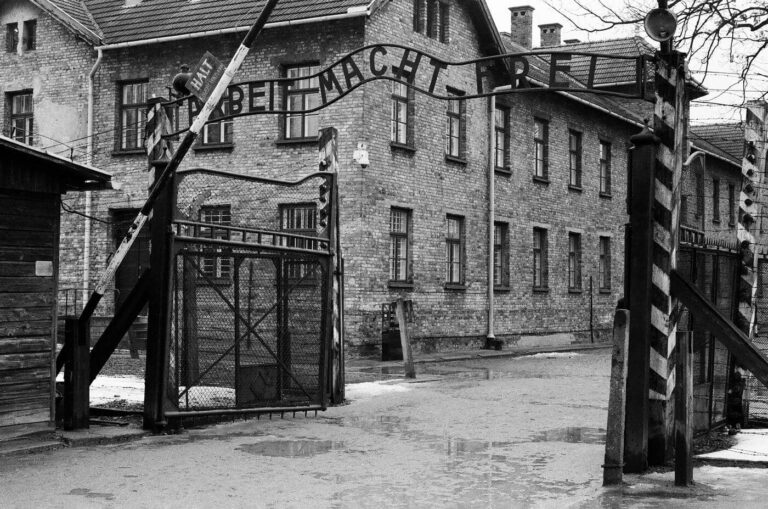
When Auschwitz I opened in 1940, it occupied a compact area consisting mainly of pre-war Polish military buildings. The brick barracks, administrative offices and service buildings were adapted rather than newly constructed.
At this stage, the camp resembled other concentration camps established by Nazi Germany during the early years of the war.
1941–1942: Rapid Expansion
Construction of Birkenau dramatically altered the surrounding landscape. Fields and villages were cleared to create a vast camp divided into sectors enclosed by electrified fences and guarded by watchtowers.
Roads, railway lines, drainage systems, workshops, warehouses and hundreds of barracks appeared within only a few years.
1943–1944: An Industrial Camp System
By 1943, Auschwitz had evolved into a complex combining imprisonment, forced labour and systematic extermination.
The construction of crematoria, gas chambers and additional railway infrastructure demonstrated how engineering and logistics were incorporated into the functioning of the camp.
The surrounding area also expanded to include factories, agricultural sites and dozens of satellite camps supplying forced labour to German industry.
1945: Destruction and Survival
As Soviet forces approached in January 1945, the SS attempted to destroy evidence of their crimes.
Gas chambers and crematoria at Birkenau were blown up, documents were burned and many buildings were damaged or dismantled.
Despite these efforts, a remarkable amount of authentic historical evidence survived, allowing today’s Memorial to preserve one of the world’s most important sites of Holocaust remembrance.
What Visitors See Today
Modern visitors encounter two sites that preserve different aspects of Auschwitz’s history.
Auschwitz I
The original camp functions as the educational and exhibition centre of the Memorial.
Visitors walk through authentic brick buildings containing permanent exhibitions based on original documents, photographs and personal belongings recovered after liberation.
Among the most moving objects displayed are:
- thousands of shoes belonging to victims
- suitcases marked with names and addresses
- eyeglasses
- kitchen utensils
- photographs of deported families
- official camp records
- survivor testimonies
These collections demonstrate that behind every statistic was an individual human life.
Birkenau
Birkenau offers a very different experience.
Instead of museum galleries, visitors encounter an immense historical landscape stretching across approximately 175 hectares.
Here they can see:
- the historic railway entrance
- the unloading ramp
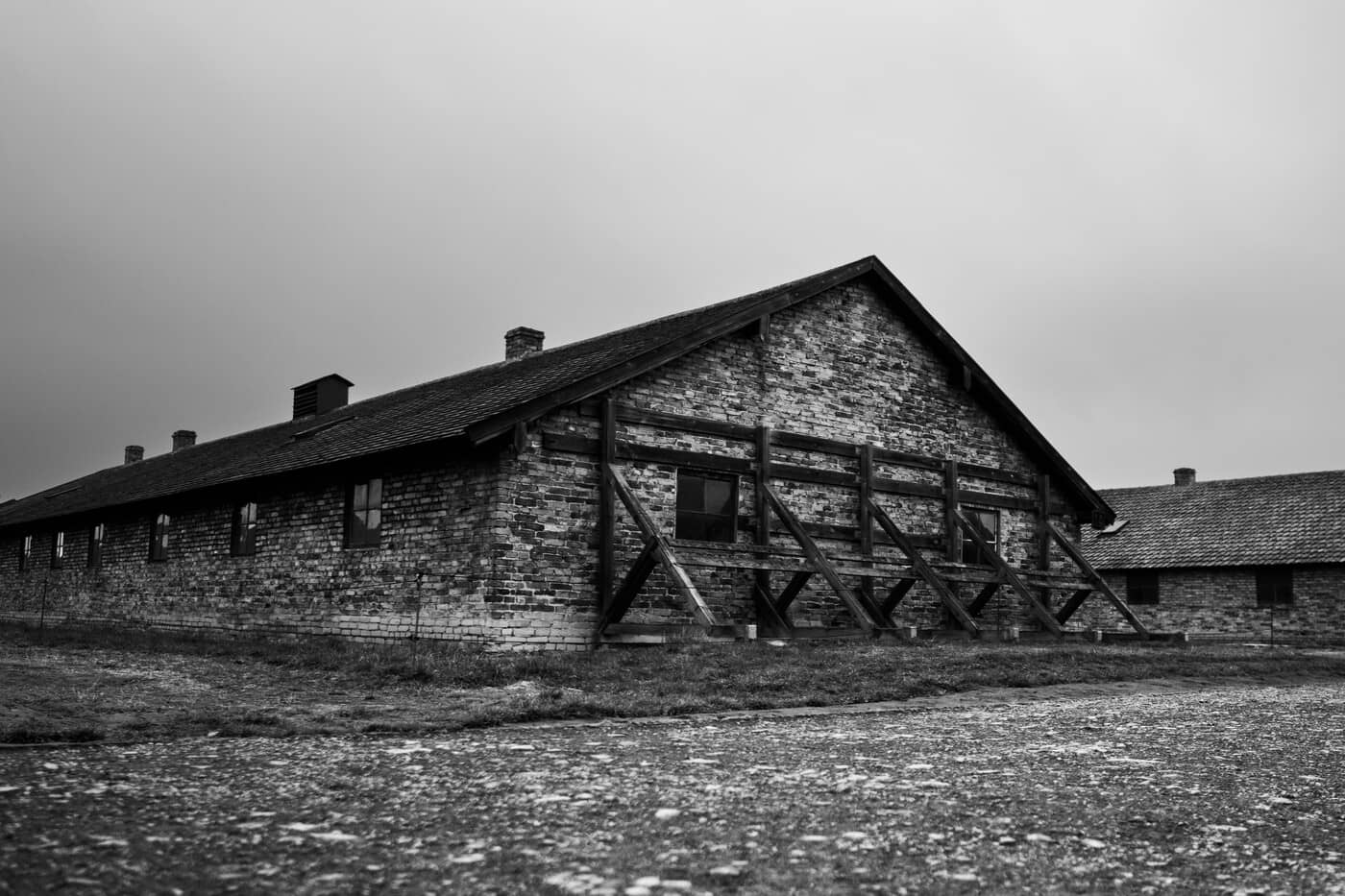
- rows of original prisoner barracks
- guard towers and perimeter fencing
- the ruins of Crematoria II, III, IV and V
- the International Memorial to the Victims
The open landscape itself forms part of the exhibition. Its scale helps visitors understand dimensions of the camp that cannot be conveyed through photographs or written descriptions alone.
Together, Auschwitz I and Birkenau preserve complementary aspects of history: one explains how the camp system functioned, while the other reveals the scale on which it operated.
Why This Historical Timeline Matters
Viewing Auschwitz through a chronological perspective helps visitors understand that the camp did not emerge fully developed.
Between 1940 and 1945, Nazi policy evolved significantly. The Auschwitz complex changed in response to military developments, ideological decisions and the growing scale of persecution across occupied Europe.
Understanding this evolution also helps explain why both Auschwitz I and Birkenau are essential parts of the Memorial today.
One tells the story of administration, imprisonment and forced labour. The other reveals the industrial scale of deportation and extermination.
Together, they preserve one interconnected historical narrative.
Key Takeaways
- Auschwitz began in 1940 as a concentration camp for Polish political prisoners
- Birkenau was constructed in 1941 as a major expansion of the camp complex
- From 1942 onward, Birkenau became one of the principal sites of the Holocaust
- The camp reached its greatest size during 1944
- Auschwitz was liberated on 27 January 1945
- Today’s Memorial preserves authentic buildings, ruins and historical evidence rather than reconstructed replicas
- Visiting both Auschwitz I and Birkenau provides the fullest understanding of the site’s history
Frequently Asked Questions
Why did Auschwitz change so much during the war?
The camp expanded as Nazi Germany’s policies evolved. What began as a concentration camp became a much larger system combining imprisonment, forced labour and mass extermination.
When was Birkenau built?
Construction of Auschwitz II–Birkenau began in October 1941. It gradually became the largest section of the Auschwitz camp complex.
Did Auschwitz I and Birkenau operate at the same time?
Yes. From 1942 until the liberation in January 1945, both camps operated simultaneously while serving different functions within the same administrative system.
Why are there fewer buildings preserved at Birkenau?
Many structures were deliberately destroyed by the SS before liberation or deteriorated after the war. The Memorial preserves these remains as authentic historical evidence instead of reconstructing them.
Why should visitors explore both sites?
Each location explains a different aspect of Auschwitz’s history. Auschwitz I focuses on the operation of the concentration camp system, while Birkenau demonstrates its enormous physical scale and role in the Holocaust.
References
- Auschwitz-Birkenau Memorial and Museum. History of Auschwitz, Camp Development, Deportations and Preservation of the Memorial.
- United States Holocaust Memorial Museum. Holocaust Encyclopedia: Auschwitz.
- Yad Vashem – The World Holocaust Remembrance Center. The Holocaust Resource Center.
- UNESCO World Heritage Centre. Auschwitz Birkenau – German Nazi Concentration and Extermination Camp (1940–1945).
- Danuta Czech. Auschwitz Chronicle 1939–1945.
- Franciszek Piper. Auschwitz: How Many Perished.
Planning to Visit Auschwitz from Krakow?
Understanding the historical development of Auschwitz before your visit can provide valuable context for what you will see at both Auschwitz I and Auschwitz II–Birkenau.
Our guided tours from Krakow include transportation, entry arrangements and the services of licensed English-speaking museum guides who explain the historical significance of both sites throughout the visit.
Suggested Reading:
The History of Auschwitz: A Beginner’s Guide
Auschwitz I vs Birkenau: What’s the Difference? History & Guide